
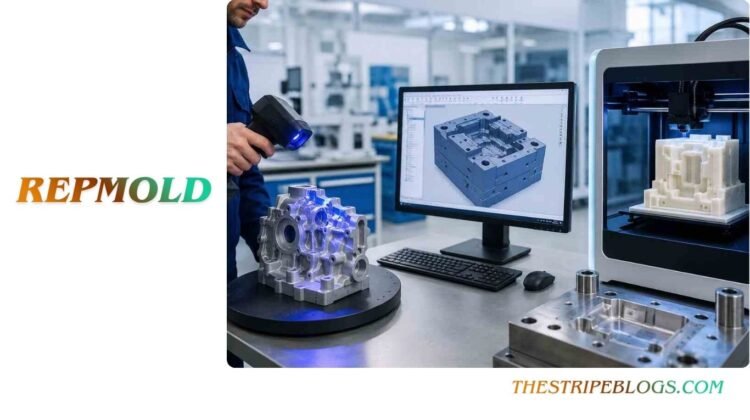
RepMold: A Complete Guide to Digital Mold Manufacturing
If you have recently searched for “repmold,” you may have noticed that the term appears in different manufacturing and technology contexts. Some online sources describe RepMold as a modern approach to mold manufacturing that combines digital design, rapid prototyping, automation, 3D printing, simulation, and quality control. Other sources use the term more generally for mold replication, reverse engineering, or digitally supported tooling.
That difference is important because RepMold is still an emerging term rather than a universally standardized manufacturing technology. Current online discussions commonly connect it with real and established technologies such as CAD, 3D scanning, CNC machining, additive manufacturing, simulation, and automated inspection.
For that reason, the most useful way to understand repmold is not to treat it as one particular machine or a single manufacturing process. Instead, it can be viewed as a digital-first approach to designing, creating, replicating, testing, and improving molds.
This article explains what repmold means, how a repmold-style workflow can work, which technologies may be involved, its advantages and limitations, practical applications, costs, quality considerations, and what businesses should verify before adopting a solution described as RepMold.
What Is RepMold?
RepMold is an emerging term associated with digitally driven mold manufacturing and mold replication. In practical terms, it describes an approach where digital engineering tools and modern production technologies are combined to make mold development faster, more flexible, and more repeatable.
A typical repmold workflow may involve a digital product model, CAD software, simulation, rapid prototyping, precision machining or additive manufacturing, mold testing, dimensional inspection, and production refinement.
The exact workflow can vary significantly depending on the product, material, production quantity, mold type, and required tolerance.
One important point should be made clear: RepMold does not currently have one universally accepted technical definition. Recent online sources describe it in several related ways, including digital mold making, rapid tooling, mold replication, reverse engineering, and digitally supported manufacturing.
This means businesses should look at the actual technologies behind a RepMold claim rather than assuming that the name itself guarantees a particular capability.
For example, if a manufacturer says its RepMold process uses 3D scanning, CAD, CNC machining, and automated inspection, those individual technologies can be evaluated independently. That provides a much more reliable basis for judging the solution.
In simple language, repmold can be understood as a smarter way of approaching mold development by connecting digital information with physical manufacturing.
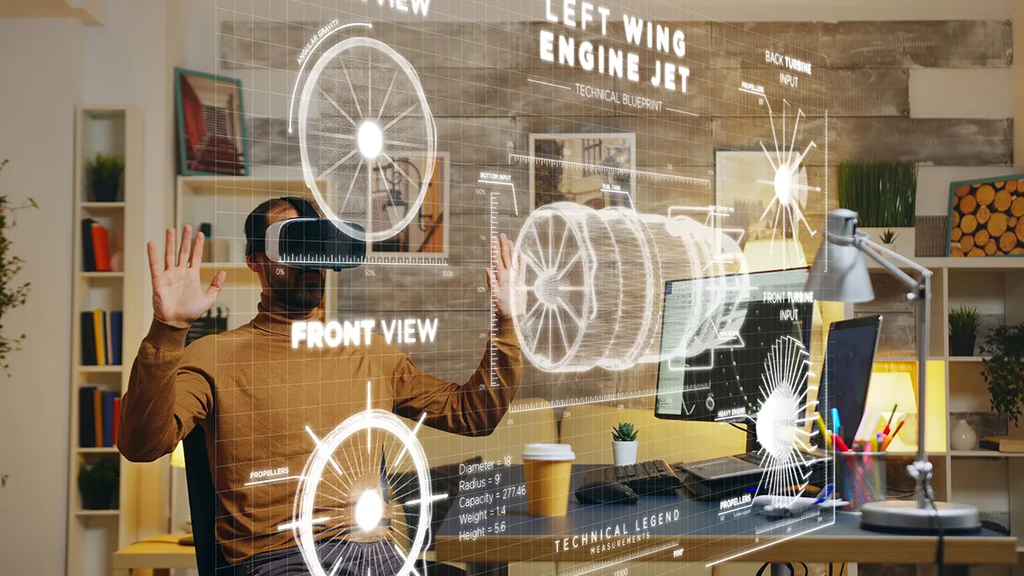
Why RepMold Is Becoming Important in Modern Manufacturing
Manufacturing companies face several pressures at the same time.
Customers want products faster. Engineers need more design flexibility. Businesses want lower tooling costs. Quality requirements are becoming stricter. At the same time, manufacturers are under increasing pressure to reduce material waste and avoid unnecessary production.
Traditional mold manufacturing remains extremely important, especially for high-volume production. However, traditional tooling can involve considerable design, machining, testing, and revision work.
A single design change may require modifications to tooling. If the problem is discovered late, the company can lose time and money.
Digital manufacturing approaches can reduce some of these problems by moving more testing and analysis into the digital stage.
For example, CAD software can allow engineers to change a mold design before machining begins. Simulation can help identify potential problems before physical production. A 3D printer can sometimes create a prototype or temporary tooling solution without requiring a full traditional tool.
This does not mean that digital manufacturing eliminates traditional tooling. Instead, it creates more options.
That is one of the most useful ways to understand the potential of repmold.
The real advantage is not simply that a mold can be produced quickly. The bigger opportunity is that design, testing, manufacturing, and inspection can become part of one connected workflow.
How Does a RepMold Process Work?
A repmold-style manufacturing process can contain several stages. The exact sequence depends on the project, but the following workflow provides a practical model.
1. Product Design and Digital Modeling
The process usually begins with a product design.
Also Read:Fascisterne: Meaning, History, and Danish Fascism Explained
If a digital model already exists, engineers can use CAD data as the starting point. If the original product only exists as a physical object, 3D scanning or other measurement techniques may be used to create digital geometry.
The digital model becomes the foundation for later mold development.
At this stage, engineers can examine dimensions, wall thickness, angles, cavities, openings, and other design characteristics.
The goal is to create a model that can be manufactured accurately rather than simply creating a visually correct digital object.
2. Design Analysis and Simulation
Once the digital model is ready, engineers can analyze the proposed mold and part.
Depending on the application, simulation may help evaluate issues such as material flow, cooling, filling behavior, shrinkage, warping, stress, or potential defects.
This stage is especially useful because physical tooling can be expensive to modify.
Finding a potential problem digitally may be much cheaper than discovering it after the mold has already been manufactured.
Simulation does not replace physical testing, however. Real materials and real production conditions can behave differently from digital predictions.
The best approach is therefore to use simulation as a decision-support tool rather than treating it as an absolute guarantee.
3. Mold Design
The next stage is converting the product geometry into an appropriate mold design.
Engineers may need to determine:
- Mold cavity configuration
- Core design
- Parting lines
- Draft angles
- Cooling channels
- Gates and runners
- Ejection systems
- Venting
- Material selection
- Expected production volume
- Required surface finish
These decisions have a direct impact on product quality and mold life.
A simple prototype mold may have very different requirements from a production mold expected to manufacture hundreds of thousands or millions of parts.
4. Rapid Prototyping
For certain applications, rapid prototyping can be used before permanent tooling is manufactured.
A prototype can help answer practical questions.
Does the part fit correctly?
Does it assemble properly?
Is the shape comfortable?
Does it interfere with another component?
Can the design survive basic functional testing?
These questions are much easier to answer when engineers have a physical sample.
3D printing is particularly useful at this stage because it can produce physical models directly from digital designs.
However, a 3D-printed prototype is not automatically equivalent to an injection-molded production component. Differences in material properties, surface finish, strength, heat resistance, and dimensional behavior must be considered.
5. Mold Fabrication
After the design is validated, the actual mold can be manufactured.
Depending on the application, fabrication may involve CNC machining, electrical discharge machining, additive manufacturing, casting, or a combination of methods.
Traditional metal tooling remains highly valuable for demanding production environments.
Additive manufacturing can be useful for rapid tooling, complex geometries, prototype molds, conformal cooling structures, or situations where manufacturing speed is more important than maximum tool life.
The correct technology depends on the production requirements.
6. Testing and Inspection
The newly manufactured mold should be tested before it is treated as production-ready.
Inspection can include dimensional measurement, surface inspection, functional testing, and comparison against the original CAD model.
Modern manufacturing facilities may use coordinate measuring machines, optical scanners, machine vision, or other metrology systems.
This stage is critical because a digitally designed mold can still contain physical manufacturing errors.
Digital accuracy is valuable only when it translates into physical accuracy.
7. Production and Continuous Improvement
Once the mold passes inspection, it can enter production.
Production data can then be used to identify recurring issues.
For example, manufacturers may discover that a particular region of the mold produces inconsistent dimensions. Engineers can investigate the cause and adjust the tooling, process conditions, material, cooling, or inspection procedure.
This creates an important feedback loop:
Design → Simulation → Manufacturing → Testing → Production → Data → Improvement
That feedback loop is one of the strongest ideas behind digitally connected manufacturing.
What Technologies Are Associated With RepMold?
RepMold is not one specific machine. It is better understood as a combination of technologies that may work together.
Several established technologies are particularly relevant.
Computer-Aided Design
CAD is the foundation of many modern mold-development workflows.
Engineers can create detailed three-dimensional models and modify them without physically rebuilding the product each time.
CAD also makes it easier to store and reuse design information.
For businesses with many product variations, a digital model can become an important long-term manufacturing asset.
3D Scanning
3D scanning can be useful when engineers need to reproduce an existing physical component.
Instead of manually measuring every surface, a scanner can capture large amounts of geometric information and convert it into digital data.
This can support reverse engineering, replacement parts, mold repair, and design documentation.
However, scanning accuracy depends on the equipment, surface characteristics, scanning method, calibration, and data-processing workflow.
A scan should therefore be treated as measurement data rather than automatically assuming that it is a perfect digital copy.
3D Printing
Additive manufacturing can produce prototypes, patterns, inserts, and some forms of rapid tooling.
Its biggest advantage is design flexibility.
A manufacturer can move from a digital file to a physical object without using the same sequence of subtractive machining operations required for traditional manufacturing.
For low-volume or prototype applications, this can provide major time savings.
CNC Machining
CNC machining remains one of the most important technologies for precision mold manufacturing.
A CNC machine can remove material according to digital instructions to create highly accurate components.
Metal molds, inserts, cores, and other tooling components can often be produced using CNC processes.
The combination of CAD and CNC is especially powerful because the digital design can flow directly into manufacturing.
Simulation Software
Simulation can help engineers understand how a product or mold may behave before physical production.
For injection molding, for example, simulation can be used to study material filling, cooling, shrinkage, and other process-related factors.
The value of simulation is not that it predicts everything perfectly. Its value is that it can identify potential problems early.
Artificial Intelligence
Some recent descriptions of repmold connect the concept with artificial intelligence.
AI can potentially support manufacturing in areas such as:
- Design optimization
- Defect detection
- Predictive maintenance
- Process monitoring
- Quality inspection
- Production forecasting
- Anomaly detection
- Manufacturing data analysis
However, AI should not be treated as a required part of every repmold process.
There is currently no strong basis for claiming that every system called RepMold must use AI. Some descriptions use AI as part of a broader smart-manufacturing concept, while others focus on CAD, scanning, rapid tooling, and replication.
This distinction is important for businesses evaluating technology vendors.
Automated Quality Inspection
Machine vision and automated measurement systems can help manufacturers inspect parts more consistently.
Instead of relying entirely on manual visual checks, a digital inspection system can compare manufactured components against predefined requirements.
This can be especially useful when production volumes are high and small defects can become expensive.
What Are the Main Benefits of RepMold?
The potential benefits of a repmold-style workflow come mainly from connecting digital design with efficient physical production.
Faster Development
One of the biggest advantages is speed.
Digital design tools allow engineers to make changes quickly. Rapid prototyping can then provide a physical version for evaluation.
This can shorten the distance between an idea and a testable product.
Lower Prototype Costs
Traditional tooling can be expensive, particularly when the product design is still changing.
Rapid tooling and additive manufacturing can sometimes provide a lower-cost way to test a design before investing in permanent tooling.
This does not mean rapid tooling is always cheaper. The economics depend on material, complexity, volume, tooling life, and production requirements.
Easier Design Changes
Digital models are easier to modify than physical tools.
If engineers identify a problem during development, they can revise the CAD model and manufacture an updated version.
This makes digital workflows particularly attractive for products that change frequently.
Better Traceability
Digital manufacturing creates opportunities to record design versions, inspection results, machine settings, material information, and production data.
Better traceability can make it easier to identify where a problem occurred.
For regulated or quality-sensitive industries, documentation can be just as important as physical accuracy.
Reduced Material Waste
Digital simulation and better process planning can reduce some forms of unnecessary trial and error.
Additive manufacturing can also use material differently from subtractive machining because it builds objects layer by layer.
Still, sustainability should not be assumed simply because a process is digital.
Printing materials, machining waste, energy consumption, tool replacement, and rejected parts all contribute to environmental impact.
Support for Custom Manufacturing
Businesses increasingly want products tailored to specific customers.
A digitally driven workflow can make customization easier because design information can be modified without rebuilding an entire manual process.
This can be useful for specialized components, limited product runs, and personalized products.
What Industries Can Use RepMold?
Because the term is broad, its potential applications span many manufacturing sectors.
Automotive Manufacturing
Automotive companies use molds and tooling for many components.
Digital mold development can help engineers test designs, create prototypes, and produce replacement or low-volume parts.
The automotive industry can also benefit from reverse engineering when older components need to be documented or reproduced.
Medical Products
Medical manufacturing often requires high levels of dimensional control.
Molds may be used to produce plastic components, housings, devices, and other products.
For medical applications, however, speed alone is not enough. Materials, validation, documentation, cleanliness, regulatory requirements, and quality systems are critical.
A manufacturer should never assume that a general-purpose RepMold process is automatically suitable for medical production.
Aerospace
Aerospace manufacturing places strong demands on accuracy, repeatability, materials, and documentation.
Digital workflows can support prototype development, tooling, replacement components, and complex manufacturing processes.
Again, aerospace applications require appropriate qualification and quality controls.
Consumer Products
Consumer products are another natural application.
Companies producing household goods, electronics housings, packaging, accessories, and other products may need rapid design changes.
Digital mold development can help shorten product development cycles.
Electronics
Electronics manufacturers often require detailed plastic housings and small precision components.
A digital tooling workflow can be useful when products are updated frequently.
The ability to quickly modify tooling can become valuable in competitive consumer electronics markets.
Industrial Equipment
Industrial machinery may require replacement components that are no longer readily available.
Reverse engineering and digital mold development can help create replacement tooling where original documentation is missing.
This is especially useful for older equipment.
Also Read:Hggbfe3fykc: Meaning, Uses, and What It Represents
RepMold vs Traditional Mold Making
It is easy to assume that repmold completely replaces traditional mold manufacturing.
That is not necessarily true.
Traditional mold making has major advantages.
Established tooling methods can produce durable molds designed for long production runs. Skilled machinists and toolmakers can handle complicated engineering requirements that automated systems may not solve independently.
A digitally driven approach is strongest when it complements traditional manufacturing.
For example, a manufacturer could use CAD and simulation to optimize a mold design, CNC machining to manufacture the primary tool, automated inspection to verify it, and production data to improve future versions.
The result is not “digital instead of traditional.”
It is digital plus traditional.
That distinction provides a more realistic view of modern manufacturing.
RepMold vs 3D Printing
RepMold and 3D printing should not be treated as synonyms.
3D printing is an additive manufacturing method. It creates objects by adding material layer by layer.
Mold manufacturing is a broader field involving tools that shape another material.
A 3D printer may be used within a repmold-style workflow, but it does not define the entire process.
For example, a company might 3D print a prototype, use the prototype to validate the design, then manufacture a metal production mold using CNC machining.
In that case, 3D printing is only one stage of the overall workflow.
RepMold vs Injection Molding
Injection molding is an established manufacturing process.
In injection molding, material such as thermoplastic is heated and injected into a mold under controlled conditions.
RepMold, by comparison, is an emerging and less precisely defined term that may describe how molds are designed, replicated, or produced using digital technologies.
Therefore, RepMold is not simply another name for injection molding.
A repmold workflow can actually support injection molding by helping engineers design, test, manufacture, and inspect the injection mold.
What Are the Limitations of RepMold?
A professional discussion should not focus only on advantages.
Digital mold manufacturing also has limitations.
The Term Is Not Standardized
The biggest issue is terminology.
Different sources use RepMold to describe different concepts. Some describe digital mold manufacturing, some describe replication, and others connect it with AI.
This means businesses should ask exactly what a supplier means when using the term.
Digital Tools Do Not Eliminate Engineering
CAD software can create impressive models, but software does not automatically understand every manufacturing challenge.
Engineers still need knowledge of materials, tolerances, heat transfer, tooling, machining, production conditions, and quality control.
Rapid Tooling May Have Lower Tool Life
Some rapid molds are designed for prototypes or short production runs.
They may not withstand the same number of cycles as hardened production tooling.
Choosing the wrong tooling method can therefore increase costs rather than reduce them.
Accuracy Still Depends on Physical Manufacturing
A perfect digital model does not guarantee a perfect physical mold.
Machine calibration, tool wear, material behavior, thermal expansion, finishing, and operator skill can all influence results.
AI Can Be Overstated
AI is useful, but it is not magic.
An AI system depends on appropriate data, good models, reliable sensors, and proper validation.
Manufacturers should be cautious about vendors that use “AI-powered” as a marketing phrase without explaining what the AI actually does.
How Much Does RepMold Cost?
There is no universal RepMold price because RepMold does not represent one standardized product or service with one fixed pricing model.
The cost of a digitally supported mold project can depend on:
- Part size
- Part complexity
- Mold complexity
- Required tolerances
- Material
- Tooling material
- Production volume
- Surface finish
- Prototype requirements
- CAD work
- Scanning
- Simulation
- CNC machining
- 3D printing
- Inspection
- Engineering labor
- Certification requirements
A prototype mold may cost dramatically less than a hardened steel production mold.
Similarly, a simple component may require relatively little engineering, while a complex multi-cavity mold may require extensive design and testing.
For US manufacturers, the best approach is to request a detailed quotation rather than asking only for a “RepMold price.”
The quotation should clearly separate engineering, tooling, materials, prototypes, inspection, and production costs.
How Businesses Should Evaluate a RepMold Solution
If a company is considering a supplier or technology marketed as RepMold, it should ask practical questions.
First, ask what the company means by RepMold.
Then ask which technologies are actually used.
A useful checklist includes:
- What manufacturing process is being used?
- Is the mold made from metal, polymer, composite, or another material?
- What production volume is the tooling designed to support?
- What dimensional tolerances can realistically be achieved?
- How is the mold inspected?
- Is 3D scanning part of the process?
- Is CNC machining involved?
- Is additive manufacturing used?
- What simulation tools are available?
- Is AI actually used, and if so, for what function?
- What materials can be processed?
- What certifications are available?
- What happens if the mold requires revision?
- How is tool life measured?
- Can the supplier provide relevant production examples?
These questions are more valuable than simply asking whether a supplier offers “advanced RepMold technology.”
How RepMold Could Influence the Future of Manufacturing
The long-term importance of repmold may come from the convergence of several technologies rather than from the word itself.
Manufacturing is becoming increasingly digital.
CAD models can connect with simulation systems. Simulation can connect with manufacturing planning. Manufacturing equipment can generate production data. Inspection systems can compare physical parts with digital models.
Artificial intelligence can then analyze some of that data to identify patterns.
This creates a broader manufacturing ecosystem.
In the future, a mold may not simply be a physical piece of tooling. It may be accompanied by a digital record containing its design history, manufacturing parameters, inspection data, maintenance history, and production performance.
That information could make tooling easier to maintain and reproduce.
For example, if a mold becomes damaged several years after production, a manufacturer with complete digital records may be able to reproduce the relevant component more easily than a company relying only on old physical tooling.
This is where the concept behind repmold becomes particularly interesting.
The value is not just faster mold production.
The larger opportunity is digital continuity.
Is RepMold a Good Choice for Every Manufacturer?
No.
The best manufacturing method depends on the application.
A company producing millions of identical components may benefit more from conventional high-durability tooling optimized for long production runs.
A startup developing a new product may benefit from rapid prototyping and flexible tooling.
A company producing replacement parts for older machinery may benefit from 3D scanning and reverse engineering.
A medical manufacturer may require a highly controlled and validated process.
A prototype developer may prioritize speed over maximum mold life.
Therefore, the right question is not “Is RepMold better than traditional manufacturing?”
The better question is:
“What combination of technologies gives this particular project the best balance of cost, speed, quality, durability, and risk?”
That is a much stronger engineering question.
What Makes a High-Quality RepMold Workflow?
A good repmold-style workflow should be built around measurable outcomes.
Speed is useful, but speed without quality can create expensive failures.
Likewise, accuracy is valuable, but extreme accuracy that is unnecessary for the product can increase costs without providing meaningful benefits.
A strong workflow should balance:
- Design accuracy
- Manufacturing speed
- Tool life
- Material performance
- Production volume
- Dimensional tolerance
- Surface quality
- Inspection
- Cost
- Maintenance
- Scalability
The most successful manufacturers will likely be those that use digital tools where they provide real value while retaining proven physical manufacturing practices where they remain superior.
Common Misunderstandings About RepMold
Several misunderstandings can arise when people search for repmold online.
The first is that RepMold is necessarily one specific machine.
It is better to treat it as an emerging term with multiple interpretations.
The second is that RepMold automatically means AI.
AI may be part of some modern manufacturing workflows, but it is not necessary for every mold-making process.
The third is that RepMold and 3D printing are the same thing.
They are not.
The fourth is that faster mold manufacturing always means lower costs.
Faster production can reduce labor and development time, but advanced equipment, software, materials, and engineering services can also be expensive.
The fifth is that a digital workflow eliminates the need for skilled engineers.
In reality, digital tools make engineering knowledge more valuable because professionals must still decide what should be designed, simulated, manufactured, tested, and changed.
The Future Outlook for RepMold
The future of repmold is closely connected to the broader growth of smart manufacturing.
Several trends are likely to shape the field.
More manufacturers are expected to use connected CAD and manufacturing systems.
3D scanning is likely to become more accessible for reverse engineering and inspection.
Additive manufacturing may continue to expand its role in prototypes and specialized tooling.
Simulation will likely become more integrated with design and production decisions.
AI may become more useful for detecting defects, optimizing processes, and analyzing manufacturing data.
Automated inspection could also become increasingly important as companies seek more consistent quality.
However, the future should not be understood as a complete replacement of traditional manufacturing.
Instead, manufacturing is likely to become more hybrid.
Digital tools will handle more analysis, optimization, documentation, and automation, while physical manufacturing processes will continue to provide the final products.
Also Read:Seekde: Complete Guide to the AI-Powered Learning Platform
Frequently Asked Questions About RepMold
Is RepMold an official manufacturing standard?
No universally recognized industry standard currently establishes RepMold as one specific manufacturing technology. The term is used online to describe several related concepts, including digital mold making, replication, rapid tooling, and digitally supported manufacturing.
Does RepMold require a 3D printer?
No. A RepMold-style workflow may use 3D printing, but it can also involve CNC machining, casting, 3D scanning, traditional tooling, or combinations of these methods.
Can RepMold replace conventional mold makers?
Not necessarily. Skilled toolmakers and manufacturing engineers remain important. Digital systems can improve their workflow by providing better design data, simulation, automation, and inspection tools.
Is RepMold suitable for large-scale production?
It can be, depending on the actual tooling method. Some digitally developed molds may be appropriate for large production volumes, while rapid tooling may be better suited to prototypes or short runs.
Is RepMold environmentally friendly?
It can reduce certain types of waste and unnecessary trial production, but there is no automatic environmental benefit simply because a process is called RepMold. Energy use, material selection, tool life, recycling, rejected parts, and production efficiency all need to be considered.
Conclusion: What RepMold Really Means for Modern Manufacturing
RepMold is best understood as an emerging term associated with digitally driven mold manufacturing, mold replication, rapid tooling, reverse engineering, and smart production.
Its importance comes from the technologies behind the concept. CAD, 3D scanning, simulation, CNC machining, additive manufacturing, automation, digital inspection, and AI can work together to make mold development more flexible and data-driven.
At the same time, it is important to avoid treating RepMold as a universally standardized technology. Current online sources use the term in different ways, and there is no single specification that defines exactly what every RepMold system must contain.
For US businesses, the safest and most practical approach is to evaluate the underlying process instead of relying on the name.
Look at the equipment, materials, tolerances, tool life, inspection methods, certifications, production volume, engineering support, and total cost.
The real strength of the RepMold concept is not simply producing a mold faster. It is the possibility of connecting design, simulation, fabrication, inspection, and improvement into one continuous digital manufacturing workflow.
That shift can help manufacturers respond faster, reduce development risk, and make better production decisions. As digital manufacturing continues to mature, approaches built around this combination of physical tooling and digital intelligence are likely to become increasingly important.