

Blazertje: What Does Blazertje Mean in Dutch?
The word “blazertje” may look unfamiliar to English speakers, but its meaning is quite simple. Blazertje is a Dutch word and is the diminutive form of “blazer.” In basic terms, it means a “little blazer,” “small blazer,” or sometimes a blazer that is perceived as neat, light, or relatively small.
For people searching for “blazertje,” the main question is usually linguistic: What does blazertje mean, where does the word come from, and how is it used in Dutch? Understanding the word requires a little knowledge of Dutch grammar, especially the way Dutch speakers use diminutive endings.
This guide explains blazertje in simple English. It covers its translation, pronunciation, grammar, clothing meaning, common usage, cultural context, online search intent, and related Dutch vocabulary. It also explains why a direct English translation does not always capture the full feeling of a Dutch diminutive.
What Does Blazertje Mean?
Blazertje is a Dutch diminutive of the word “blazer.”
The most direct English translation is:
“little blazer” or “small blazer”
The basic structure is:
- Blazer = blazer
- Blazertje = little blazer / small blazer
The ending “-tje” is one of the common Dutch diminutive endings. Dutch uses diminutives very frequently, and they can express more than physical size.
Depending on the sentence and context, blazertje may refer to a small blazer, a particular style of blazer, or a blazer described in a softer or more informal way.
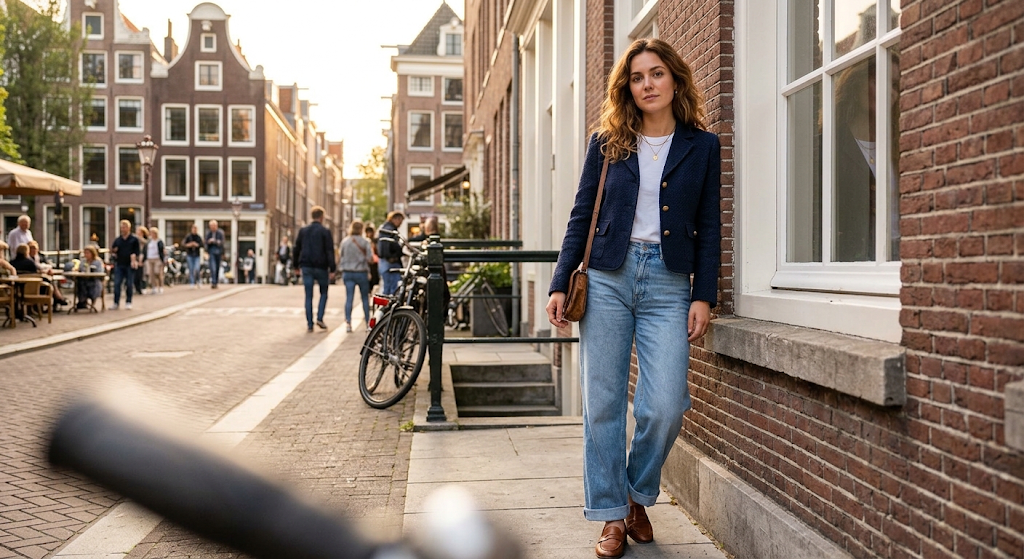
For example, a Dutch speaker might use blazertje when talking about a light or relatively small blazer as part of an outfit.
Therefore, the simplest answer to “What is blazertje?” is that it is a Dutch word meaning “little blazer” or “small blazer.”
How Is Blazertje Formed in Dutch?
Understanding the grammar makes blazertje easier to understand.
Dutch frequently creates diminutive nouns by adding endings such as:
- -je
- -tje
- -pje
- -etje
- -kje
The correct ending depends on the spelling and sound of the original word.
In this case, “blazer” becomes “blazertje.”
The important part is “-tje.” This ending signals that the noun is being used as a diminutive.
This is similar to how Dutch creates many everyday words that communicate a smaller or more familiar version of something.
For English speakers, it is useful to remember that Dutch diminutives are much more common than English diminutives.
A Dutch diminutive does not necessarily mean that an object is physically tiny.
That is one of the most important points when interpreting blazertje.
Why Does Dutch Use Diminutives So Often?
Dutch is well known for its extensive use of diminutives.
In English, words such as “little,” “small,” or “cute” are often added separately. Dutch can communicate some of these ideas through the noun itself.
For example:
- huis = house
- huisje = little house
- boek = book
- boekje = little book
- hond = dog
- hondje = little dog
The diminutive form can indicate physical size, but that is only one possible meaning.
Also Read:Almawadahit .com USA: What It Is, Safety, Privacy, and More
It can also communicate:
- affection
- familiarity
- informality
- friendliness
- emotional warmth
- casual speech
- a softer tone
This is why translating every Dutch diminutive simply as “small” can sometimes sound unnatural in English.
The context matters.
Does Blazertje Always Mean a Small Blazer?
No.
Although blazertje literally suggests a smaller blazer, Dutch diminutives do not always describe physical size.
A speaker could use a diminutive because the item feels:
- informal
- cute
- pleasant
- familiar
- less serious
- visually small
- delicate
- casual
The exact meaning depends on the sentence.
This is an important distinction for anyone learning Dutch.
If you see blazertje in an online product description, for example, it does not automatically mean the garment is physically smaller than every other blazer.
It may simply be part of a friendly or informal description.
How Do You Pronounce Blazertje?
For English speakers, Dutch pronunciation can make blazertje look more difficult than it actually is.
The approximate pronunciation is something like:
“BLAH-zur-tyuh”
This is only an approximation because Dutch sounds do not always have exact English equivalents.
The “j” sound in Dutch words can also be different from what English speakers expect when they see the letter.
When learning the pronunciation of blazertje, listening to a native Dutch speaker is better than relying only on an English pronunciation guide.
Dutch pronunciation resources and dictionaries can help learners hear the correct sounds.
It is also useful to remember that spelling and pronunciation in Dutch follow patterns that become easier with practice.
Is Blazertje a Dutch Word or an English Word?
Blazertje is Dutch.
It is not a standard English word.
The base word “blazer” is used in both Dutch and English, but blazertje is formed using a Dutch diminutive ending.
This explains why someone searching for blazertje may find Dutch-language pages, clothing references, dictionaries, social media posts, or translated material.
If the word appears in an English sentence, it may have been copied from Dutch or used intentionally to preserve the original Dutch expression.
Where Might You See the Word Blazertje Online?
The word blazertje may appear in several online environments.
One common context is fashion.
Dutch clothing websites may use diminutive language in product descriptions, social media captions, advertisements, or informal communication.
You might also encounter it in:
- Dutch fashion blogs
- online clothing stores
- social media posts
- Dutch-language forums
- product listings
- fashion discussions
- language-learning websites
- translation searches
Because online language is highly flexible, the meaning can depend strongly on the surrounding words.
Someone searching for only “blazertje” may therefore be looking for a translation, a clothing item, a Dutch phrase, or an explanation of the word.
What Does Blazertje Mean in Fashion?
In fashion, blazertje generally refers to a blazer described using the Dutch diminutive form.
It may be used for a blazer that is:
- relatively small
- lightweight
- compact
- casual
- delicate-looking
- informal
- visually cute or appealing
However, the word alone does not establish a technical clothing specification.
For example, blazertje does not automatically tell you:
- the jacket’s exact measurements
- its fabric
- its color
- its brand
- whether it is men’s or women’s clothing
- whether it is formal or casual
- whether it is cropped or full-length
Those details must come from the surrounding description.
This is especially important when translating online shopping pages.
Blazertje vs. Blazer: What Is the Difference?
The difference is mainly grammatical and stylistic.
| Dutch word | Basic meaning | General use |
| Blazer | Blazer | Standard noun |
| Blazertje | Little/small blazer | Diminutive or informal form |
“Blazer” is the normal noun.
“Blazertje” is the diminutive form.
The second word may add a feeling of smallness, friendliness, informality, or affection.
In English, you would normally choose between “blazer” and a phrase such as “little blazer” based on context.
Dutch can build part of that meaning directly into the noun.
Is Blazertje Used in Formal Dutch?
It can be, but context matters.
Also Read:Methatreams: What Is It? Safety, Legality, Risks & Alternatives
Diminutives are a normal part of Dutch, including everyday spoken and written Dutch.
However, the tone can be more informal or personal than the base noun.
In a formal business document, a writer may simply use “blazer” if the smaller or softer meaning is not important.
In fashion marketing, casual conversation, social media, or personal descriptions, a diminutive may feel completely natural.
Therefore, blazertje should not automatically be considered incorrect or childish.
It is a legitimate Dutch grammatical form.
Blazertje and Search Intent
People searching for “blazertje” may have different goals.
The most likely search intents include:
- Meaning and definition
- Dutch-to-English translation
- Clothing terminology
- Dutch grammar
- Pronunciation
- Fashion-related usage
- Product searches
- Understanding a Dutch sentence
A good explanation should therefore answer both the literal meaning and the linguistic context.
Simply saying “blazertje means blazer” would miss the most important part of the query: the “-tje” ending.
The diminutive form is what makes the word different from the ordinary Dutch word for blazer.
Is Blazertje a Brand or a Specific Product?
Not necessarily.
The word itself is a general Dutch linguistic form, not automatically the name of a specific brand.
If you encounter “blazertje” on a website, you should look at the surrounding information before assuming that it identifies a company, product line, platform, or organization.
This is especially important when researching unfamiliar keywords.
Search engines often combine different types of results, including:
- dictionaries
- stores
- blogs
- social media
- automated pages
- translated content
- user-generated content
A keyword can therefore have multiple interpretations.
For blazertje, the basic linguistic interpretation is the strongest starting point because the word has a clear Dutch grammatical structure.
Common Mistakes When Interpreting Blazertje
There are several mistakes English speakers can make when they encounter blazertje.
Mistake 1: Assuming It Is a Separate English Word
Blazertje is Dutch, not standard English.
The spelling may look unusual because the Dutch diminutive ending has been attached to “blazer.”
Mistake 2: Translating It Only as “Small”
The diminutive can suggest smallness, but context may add other meanings such as informality or affection.
Mistake 3: Assuming It Names a Brand
The word itself is not automatically a brand name.
It is a Dutch noun in diminutive form.
Mistake 4: Ignoring the Base Word
Understanding “blazer” makes blazertje much easier to understand.
The ending provides additional meaning.
Mistake 5: Using Machine Translation Without Context
Automatic translation can miss tone and grammatical details.
For accurate translation, the complete sentence should be considered.
How Blazertje Can Help People Learn Dutch
Blazertje is a useful example for Dutch learners because it demonstrates how a common noun can change through a diminutive suffix.
Instead of memorizing the word as an isolated term, learners can study its structure.
The basic pattern is:
“blazer” + “-tje” → “blazertje”
Once learners understand this pattern, other Dutch diminutives become easier to recognize.
This is particularly helpful for reading Dutch websites, product descriptions, menus, social media posts, and everyday conversations.
Diminutives are not a minor part of Dutch grammar. They are an important and frequently used feature of the language.
How to Understand Blazertje in a Sentence
The best way to understand blazertje is to examine the entire sentence.
Ask these questions:
- What is being discussed?
- Is the speaker talking about size?
- Is the tone casual or affectionate?
- Is the word part of a fashion description?
- Is the speaker describing an actual garment?
- Is the word being used metaphorically or informally?
These questions can help determine the most natural English translation.
For example, a literal translation may be appropriate in a dictionary.
A fashion translator, however, may choose a more natural English phrase based on the product description.
Digital Literacy When Searching for Blazertje
Searching unfamiliar words online requires some basic digital literacy.
Search engines can return pages with different levels of reliability.
For a language question such as blazertje, users should prioritize:
- established dictionaries
- reputable language resources
- native-language sources
- professional translation references
- recognized educational websites
Be cautious with pages that provide a definition without explaining the linguistic source.
A reliable explanation should distinguish between the literal meaning, grammatical function, and contextual meaning.
This is especially useful when a keyword appears on many unrelated websites.
Privacy and Safety When Researching Unknown Keywords
The word blazertje itself does not present a special safety issue simply because it is unfamiliar.
However, general online safety is still important.
When researching an unknown keyword, avoid entering personal information into unfamiliar websites.
Be careful with websites that unexpectedly request:
- passwords
- financial information
- identity documents
- unnecessary personal details
- downloads
- browser extensions
A simple language search normally does not require any sensitive information.
Users should also remember that search results can include automatically generated pages, advertisements, or low-quality content.
Evaluating the source is more reliable than trusting the first result automatically.
How Blazertje Fits Into Dutch and American English
Dutch and American English sometimes share clothing vocabulary, especially because fashion is highly international.
The word “blazer” itself is familiar in American English.
Also Read:Plor4d85 Pot: Complete Guide to This Gardening Pot
The difference appears when Dutch grammar is applied to the borrowed or shared noun.
“Blazertje” contains a Dutch diminutive ending that does not have a direct equivalent in ordinary American English word formation.
This makes the term interesting from a translation perspective.
An American reader may understand “blazer” immediately but may not understand why “-tje” has been added.
Once the Dutch diminutive system is explained, however, the meaning becomes straightforward.
Frequently Asked Questions About Blazertje
1. Is blazertje a masculine or feminine Dutch word?
Blazertje is a diminutive noun, and Dutch diminutive nouns are grammatically treated as neuter. The diminutive form therefore follows the grammatical behavior associated with Dutch neuter nouns.
2. Can blazertje refer to a blazer for children?
It can, depending on context, but the word itself does not specifically mean “children’s blazer.” The diminutive may suggest a small garment, but additional words are needed to establish that the item is intended for children.
3. Does blazertje describe a specific blazer style?
No. Blazertje is not, by itself, the name of a particular technical blazer style. It is a diminutive form of the Dutch word “blazer.” The actual style must be understood from the surrounding description.
4. Can blazertje be used outside clothing discussions?
The specific word blazertje is based on “blazer,” so its normal meaning relates to the clothing item. It should not automatically be given unrelated meanings simply because the word appears in an unfamiliar online context.
5. Why might an English translation leave blazertje untranslated?
A translator may leave it unchanged when the Dutch wording is important to the source, when the text is discussing Dutch grammar, or when there is no natural English equivalent that preserves the original tone. In other situations, “little blazer” may be the most direct translation.
Conclusion
Blazertje is a straightforward Dutch word once its structure is understood. It is the diminutive form of “blazer,” and its most direct English meaning is “little blazer” or “small blazer.”
The important detail is the Dutch diminutive ending “-tje.” Dutch uses diminutives much more extensively than English, and these forms can communicate more than physical size. Depending on context, a diminutive can suggest informality, familiarity, affection, softness, or a casual tone.
For American English speakers, the best translation of blazertje may therefore change depending on where the word appears. A dictionary may use “little blazer,” while a fashion translation may simply use “blazer” or another natural phrase if the diminutive meaning is not important.
If you encounter blazertje online, the safest interpretation is to begin with its Dutch linguistic meaning rather than assuming it is a brand, website, or specialized product. Looking at the surrounding sentence and identifying the base word and diminutive ending will usually make the meaning clear.
In short, blazertje is a useful example of how Dutch word formation works: a familiar word, “blazer,” becomes a softer or smaller-sounding form through the addition of a common Dutch diminutive ending.