
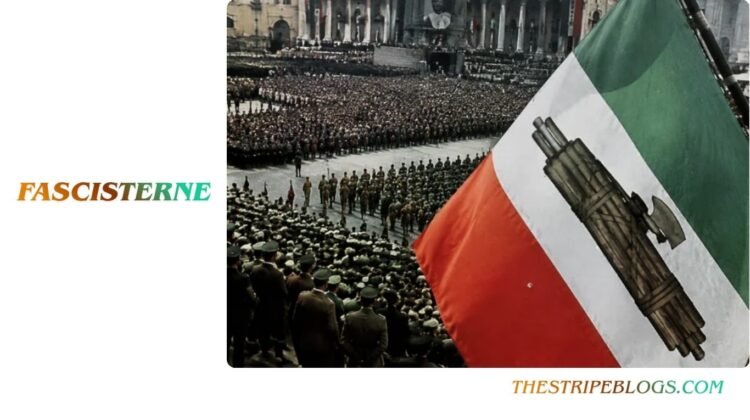
Fascisterne: Meaning, History, and Danish Fascism Explained
If you have searched for “fascisterne,” you may wonder what it means and why it is connected to Danish and European history. Fascisterne is the Danish word for “the fascists.”
The term is linked to fascism, an authoritarian political movement associated with extreme nationalism and opposition to liberal democracy.
In Denmark, it is especially relevant to the history of DNSAP, a Nazi-inspired party founded in 1930 that remained a relatively small political force during the German occupation from 1940 to 1945.
Understanding fascisterne therefore requires looking at both its Danish meaning and its historical connection to fascism and Nazism.
What Does Fascisterne Mean?
Fascisterne means “the fascists” in English.
The word refers to a group of people who are identified as fascists. The underlying word, fascist, describes a person associated with fascism or a fascist political movement.
This is different from the word fascism, which refers to the political ideology itself.
In simple terms:
- Fascism = the political ideology or movement
- Fascist = a person associated with fascism
- Fascisterne = “the fascists” in Danish
The word is therefore not the name of one specific political party.
When the term appears in historical writing, its meaning depends on the context. It may refer to Italian fascists, German fascists or Nazis, Danish fascist groups, or fascist movements in other European countries.
In Danish history, however, the word can be especially relevant when discussing the rise of nationalist and Nazi-inspired organizations during the 1930s and the German occupation.
What Is Fascism?
Fascism is an authoritarian and ultranationalist political ideology that developed in Europe during the early twentieth century.
The United States Holocaust Memorial Museum describes fascism as a far-right political philosophy that places the nation above the individual and rejects liberal democratic ideas. Fascist movements generally emphasized extreme nationalism, authoritarian leadership, political violence, militarism, and the suppression of groups considered enemies of the national community.
Fascism developed in a period of major political and economic instability.
The First World War had left Europe deeply damaged. Millions of people had died, economies were struggling, governments faced political unrest, and many societies feared revolution and social disorder.
These conditions created opportunities for political movements that promised strength, discipline, national unity, and rapid change.
Fascist movements presented themselves as alternatives to parliamentary democracy and socialism. They often argued that political disagreement weakened the nation and that a strong leader could restore order.
This helps explain why fascism cannot be reduced simply to “strong government.” Fascist politics involved a much wider combination of nationalism, authoritarianism, political mobilization, rejection of pluralism, and acceptance of political force.
How Fascism Developed in Europe
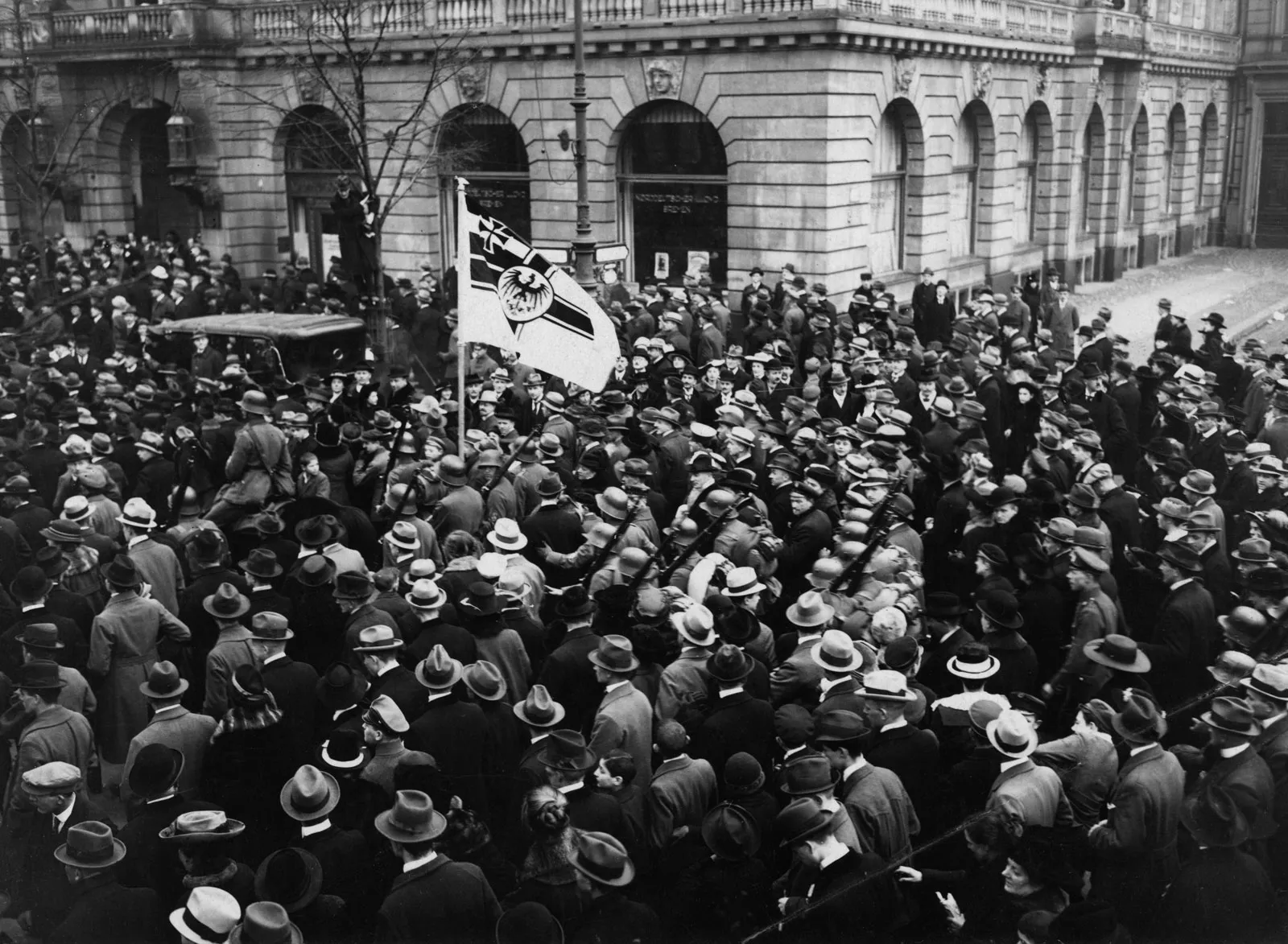
Fascism became most closely associated with Italy after the First World War.
Benito Mussolini founded the Italian fascist movement in 1919. The movement eventually developed into the National Fascist Party. In 1922, Mussolini’s supporters carried out the March on Rome, after which he became prime minister. He then gradually transformed Italy into a dictatorship.
The Italian experience became an example for political movements in other countries.
Fascist organizations appeared in several parts of Europe. Some copied Italian ideas, while others were strongly influenced by German Nazism. These movements did not all have identical beliefs, but many shared important characteristics.
They often promoted:
Also Read:Hggbfe3fykc: Meaning, Uses, and What It Represents
- Extreme nationalism
- Strong authoritarian leadership
- Opposition to liberal democracy
- Political violence
- Mass political organization
- Militarism
- Suppression of political opponents
- Hostility toward socialism and communism
- A belief in national revival
The political environment after the First World War was therefore important to the development of fascism.
However, economic problems alone did not create fascism. Political institutions, public fears, nationalism, social divisions, propaganda, leadership, and international events also influenced whether fascist movements succeeded.
Fascisterne, Fascism, and Nazism
Fascism and Nazism are closely related, but they should not be treated as exactly the same thing.
Italian fascism developed under Benito Mussolini. Nazism developed in Germany under Adolf Hitler and the National Socialist German Workers’ Party, or NSDAP.
Both systems rejected liberal democracy, supported authoritarian leadership, promoted extreme nationalism, and used propaganda and political violence.
Nazi ideology, however, placed an especially central role on racial hierarchy and antisemitism. The Nazi government created a system of persecution that ultimately led to the Holocaust and the murder of six million Jews, along with the persecution and killing of many other groups.
The United States Holocaust Memorial Museum identifies Nazi Germany as a fascist government while also explaining the distinctive racial and antisemitic features of Nazi ideology.
This distinction is important when discussing fascisterne.
Not every historical fascist movement was identical to Hitler’s Nazi Party. At the same time, Danish Nazism was heavily influenced by German Nazism, which makes the relationship between fascism and Nazism especially important in the Danish context.
Fascisterne and Danish History
Denmark had several small far-right and fascist movements during the interwar period, but the most important Nazi organization was the Danmarks Nationalsocialistiske Arbejderparti, or DNSAP.
DNSAP was founded on November 16, 1930, by Cay Lembcke. Its political program was strongly influenced by Hitler’s NSDAP. Historical research shows that the Danish party copied much of the German party’s program, symbols, political language, and organizational structure.
The party promoted Danish nationalism, opposition to parliamentary democracy, antisemitism, and a national community based on its own ideological principles.
This is an important part of understanding fascisterne in a Danish context.
The movement was not simply a group of people who wanted a stronger Danish government. It was part of a broader European political environment in which fascist and Nazi ideas were spreading.
At the same time, DNSAP developed its own Danish political identity. It attempted to present its ideology as a solution to Denmark’s political and social problems.
The party’s strong connection to Germany eventually became both a source of influence and a political weakness.
Frits Clausen and DNSAP
Frits Clausen became the most important leader of DNSAP during the 1930s.
He replaced Cay Lembcke as party leader in 1933. Under Clausen, the organization became more established and continued to promote Nazi-inspired political ideas.
Clausen’s leadership helped DNSAP become the most significant Nazi organization in Denmark.
However, the party still struggled to gain broad public support.
One reason was its close relationship with German Nazism. Although DNSAP promoted Danish nationalism, its ideology, symbols, and political organization were strongly modeled on Hitler’s movement.
That created a serious contradiction.
A party claiming to defend Danish national interests could appear less independent when it copied a foreign political movement so closely.
Historical sources note that the strong German connection made it difficult for DNSAP to present itself as a purely Danish nationalist party.
This is one of the most useful insights when studying Danish fascism: ideological influence from another country can strengthen an extremist movement’s organization while simultaneously damaging its domestic credibility.
DNSAP and Political Support in Denmark
DNSAP never became a dominant political party in Denmark.
Before the Second World War, its support remained limited. In the 1939 parliamentary election, however, the party won three seats in the Danish parliament.
During the German occupation, its membership increased considerably. Lex reports that the party had around 5,000 members in 1939 and approximately 21,500 members at the beginning of 1943. Yet this increase in membership did not translate into major electoral success.
In the 1943 election, DNSAP again won only three parliamentary seats.
This is an important historical distinction.
A political movement can have thousands of members and still fail to become a mass electoral force.
DNSAP’s experience demonstrates that the presence of an extremist organization does not automatically mean that most people in the country support its ideology.
Its political influence also depended heavily on the circumstances created by the German occupation.
Fascisterne During the German Occupation of Denmark
Germany invaded Denmark on April 9, 1940.
The occupation created new opportunities for DNSAP. Party leaders hoped that German support would help them gain political power.
Those hopes were not fulfilled.
Also Read:Seekde: Complete Guide to the AI-Powered Learning Platform
The German occupation authorities initially found it more useful to work with Denmark’s existing political institutions and government rather than immediately replace them with a DNSAP government. Historical sources describe how DNSAP hoped to take power with German assistance but failed to achieve the political breakthrough it wanted.
This is a key reason why Danish history differs from the history of Nazi Germany.
Denmark was occupied by Nazi Germany, but it did not become a DNSAP dictatorship.
DNSAP remained a political organization operating under the conditions created by the occupation.
The party also cooperated with the German occupation authorities and was involved in recruitment for German military formations, including the Waffen-SS and Frikorps Danmark.
Its association with the occupation further damaged its reputation among the wider Danish population.
The party increasingly became identified with German power rather than independent Danish nationalism.
Why Danish Fascism Did Not Take Power
One of the most interesting questions about fascisterne in Denmark is why DNSAP failed to become the country’s ruling political force.
Several factors help explain this.
First, Denmark already had established political institutions and political parties.
Second, DNSAP’s electoral support remained low.
Third, its strong connection with Hitler’s Germany made it difficult to appear genuinely independent.
Fourth, internal disagreements weakened the organization.
Fifth, the German occupation authorities did not see an immediate need to replace Denmark’s existing political system with a DNSAP government.
The party’s electoral record is particularly important.
Even when its membership increased during the occupation, its parliamentary representation remained extremely limited. In the 1943 election, it again received only three seats.
This provides an important lesson about political extremism.
A movement can gain visibility without gaining majority support.
It can also gain strength from an outside power without becoming accepted by the wider population.
In the Danish case, German military power gave DNSAP greater political relevance, but it did not give the party the popular legitimacy it needed to rule Denmark independently.
The End of DNSAP After World War II
The end of German occupation in 1945 marked the collapse of DNSAP as a major political organization.
The party dissolved in 1945. Its leaders and some members faced legal consequences for collaboration and other activities connected to the occupation. Membership itself was not automatically treated as a crime, but individuals could be prosecuted for specific actions.
Frits Clausen died in 1947.
The collapse of DNSAP did not mean that every idea associated with Nazism disappeared immediately. Political beliefs can survive the organizations that originally promoted them.
Later groups attempted to continue parts of the Danish National Socialist tradition, but none achieved the political influence that DNSAP had hoped to obtain.
The original party remains historically significant because it represents the main Danish example of a Nazi movement connected closely to the political developments of the 1930s and the German occupation.
Why Fascisterne Still Matters Today
At first glance, fascisterne may look like nothing more than a foreign word.
Its historical importance, however, goes much deeper.
Understanding fascisterne helps explain how extremist political movements developed in Europe, how democratic systems can be challenged, and how political organizations can use nationalism, fear, propaganda, and promises of national renewal to gain support.
The history also shows why political labels should be used carefully.
In modern political arguments, the word fascist is sometimes used as a general insult for someone who supports strict government policies or holds strongly nationalist views.
That broad use can create confusion.
Also Read:Money6x.com Review: What It Is, How It Works, and Is It Safe?
Historically, fascism refers to a much more specific political tradition involving authoritarian leadership, extreme nationalism, rejection of liberal democracy, suppression of political opposition, and acceptance of political violence.
Using the term carefully makes historical discussion more accurate.
The Danish experience also offers an important lesson about democracy.
DNSAP existed, organized supporters, entered elections, and cooperated with an occupying power. Yet it never won the broad electoral support needed to control Denmark.
That history demonstrates that extremist movements can be politically important without becoming majority movements.
It also shows why democratic institutions, political participation, and independent civic organizations matter.
Conclusion
Fascisterne is the Danish word for “the fascists” and is closely linked to the history of fascism and Nazism in Europe.
In Denmark, the term is especially connected with DNSAP, a Nazi-inspired movement that gained some support but never became the ruling political force.
Understanding this history helps explain the development of fascism and the importance of protecting democratic institutions.
Frequently Asked Questions About Fascisterne
Is fascisterne a Danish word?
Yes. Fascisterne is Danish and means “the fascists” in English. It is the definite plural form of the word fascist.
What is the difference between fascist and fascisterne?
Fascist refers to one person or can function as an adjective in English. Fascisterne is Danish and means “the fascists,” referring to a group of people.
Was DNSAP a fascist or Nazi organization?
DNSAP was a Danish National Socialist organization strongly inspired by Hitler’s NSDAP. Its program, organization, symbols, antisemitism, nationalism, and opposition to parliamentary democracy were heavily influenced by German Nazism.
How many seats did DNSAP win?
DNSAP won three seats in the Danish parliament in the 1939 election and again held three seats after the 1943 election. Despite increased membership during the occupation, it did not achieve a major electoral breakthrough.
Did fascisterne rule Denmark?
No. DNSAP never became the government of Denmark. Denmark was occupied by Nazi Germany from 1940 to 1945, but the existing Danish political system continued for much of the occupation, and DNSAP did not achieve the national political takeover it wanted.